
America’s Tungsten Problem Is Creating a Major Opportunity for Investors
 Author By wallstreetnationPosted on
 One of the world’s strongest-performing metals is also one of the least understood.
That metal is tungsten, and its supply-demand imbalance is creating one of the biggest investment opportunities we’ve seen.
You see, since the beginning of 2025, tungsten prices have reportedly climbed more than 600%. That easily outpaced copper, lithium, cobalt and even precious metals such as gold and silver. While that type of price increase will naturally attract attention, tungsten’s rally is about much more than speculation. In fact, it sits at the center of a growing supply-chain problem for the United States, creating opportunity for Blue Moon Metals Inc. (NASDAQ: BMM) (TSXV: MOON).
Tungsten Supply Has Created a Massive U.S. Problem
Tungsten is exceptionally dense, heat resistant and durable. Those qualities make it difficult to replace in armor-piercing ammunition, missiles, aircraft, tanks, satellites, semiconductors, medical equipment and industrial cutting tools. Making matters worse, the United States currently produces little to no tungsten domestically.
Instead, the global market remains heavily dependent on China.
China controls an estimated 80% of global tungsten supply and an even greater percentage of the processing capacity needed to turn raw concentrate into usable material. That concentration has become a serious concern for Washington, particularly as trade restrictions and geopolitical tensions threaten access to critical minerals.
Of the companies that could help the United States, Blue Moon Metals deserves a particularly closer look following a potentially transformative agreement involving its Springer Tungsten Complex in Nevada.
By the way, the U.S. Department of War, better known as the Pentagon, has committed up to $450 million to The Elmet Group, a U.S.-owned tungsten company. About $150 million of that investment has been designated for a transaction involving Blue Moon Metals’ Springer Tungsten Complex in Nevada.
Why America Needs a New Tungsten Supply Chain
The United States allowed much of its domestic tungsten industry to disappear over several decades. In the early 1980s, General Electric developed the Springer tungsten operation in Nevada to help reduce America’s reliance on foreign material. The complex included underground and open-pit mining infrastructure, a 1,200-ton-per-day mill and an ammonium paratungstate, or APT, processing plant.
Shortly afterward, low-priced tungsten from China flooded the global market. Prices collapsed, mines struggled to compete and many operations eventually shut down.
By 2015, the United States had stopped producing tungsten from domestic mines. That dependence attracted limited attention while Chinese supplies remained inexpensive and readily available. Today, however, the situation looks very different. China has tightened controls over exports of several critical minerals, including tungsten. At the same time, U.S. defense rules are making it increasingly difficult for military contractors to use material connected to certain foreign countries.
However, beginning January 1, 2027, U.S. defense contractors will face restrictions on tungsten that was mined, refined, melted or processed in China, Russia, Iran or North Korea. This means contractors may need to document the metal’s entire journey – from the mine to the finished military component.
Finding a tungsten deposit outside China is only part of the solution. If the concentrate is still sent to China for processing, it may no longer qualify for use in certain U.S. defense applications. That makes domestic processing infrastructure just as important as the mine itself.
Springer Could Help Fill the Gap
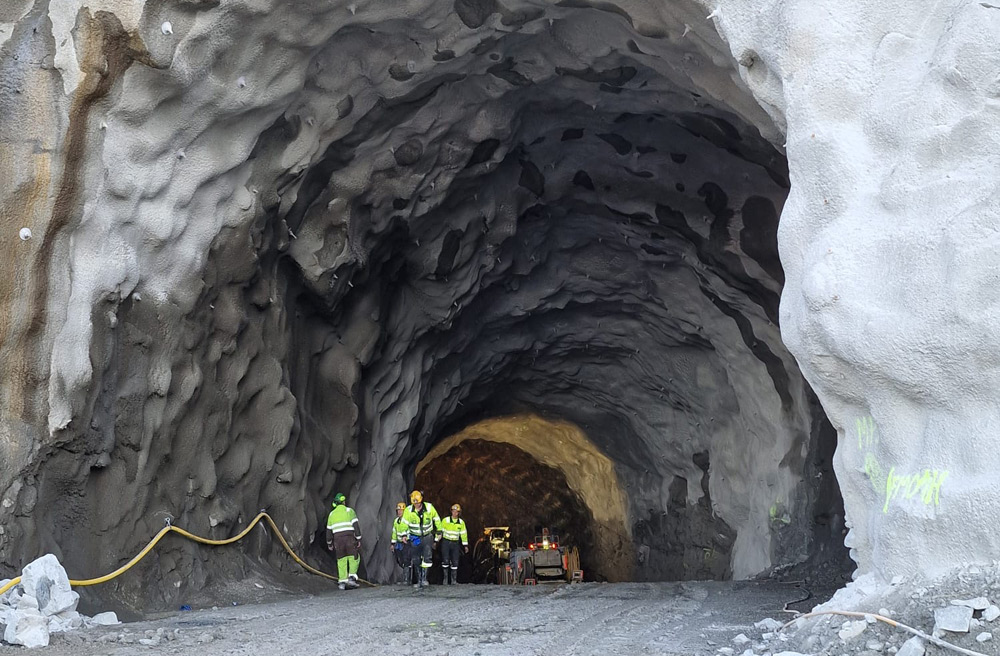
Blue Moon Metals’ Springer property is located in Pershing County, Nevada. Historically, it was one of the largest tungsten operations in the United States. The site includes former open-pit and underground mines, a 1,200-ton-per-day mill and an APT plant designed to convert tungsten concentrate into the intermediate material required by downstream manufacturers.
Much of the supporting infrastructure is already there, including access to power, water, natural gas, roads and tailings capacity. The property is also located near Interstate 80 and a Union Pacific rail line. That gives Springer an important potential advantage.
Building a comparable mining and processing complex from the ground up could take years and require hundreds of millions of dollars. Blue Moon is instead attempting to refurbish and restart infrastructure that already exists.
In August 2026, the company announced that key Nevada environmental permits had been transferred into its name and that the required reclamation bond had been approved and posted. The state also approved the project’s Notice of Construction for its tailings storage facility. Those approvals allow Blue Moon to begin certain construction and refurbishment activities, although bringing the entire operation back into production will still require additional work, capital and successful execution.
The company is currently targeting a restart of the Springer mine and mill in the fourth quarter of 2027. The APT plant could follow during the second half of 2028.
If those targets are reached, Springer could become one of North America’s first meaningful new sources of tungsten concentrate and domestically processed APT.
A Potential $150 Million Strategic Investment
The Springer story became even more interesting in September 2026.
Blue Moon, The Elmet Group and EQ Resources signed a binding letter agreement outlining a series of proposed transactions involving the redevelopment of Springer and the restart of its APT plant. Under the contemplated arrangement, Blue Moon would continue to own the Springer mine and mill. A separate joint venture would own and operate the APT plant.
The proposed ownership structure would give The Elmet Group a 70% interest in the processing joint venture, Blue Moon a 20% stake and EQ Resources the remaining 10%. Elmet would operate the APT facility. The parties described approximately $150 million in proposed investment, including funding for Springer’s mine and mill development and a $75 million capital injection into the APT plant.
The agreement also contemplates a $50 million tungsten prepayment facility for Blue Moon. The first $25 million tranche is expected upon closing, while a second $25 million would depend on the completion of agreed development milestones.
Processing May Be the Most Valuable Piece
The APT plant could be the most strategically important part of the Springer complex.
APT, an intermediate product created by chemically processing tungsten concentrate, can be converted into tungsten oxide, powder, carbide and other products used by defense and industrial manufacturers. Without that processing step, a domestic mine may still be forced to ship its concentrate overseas.
Springer’s plant reportedly has the potential to produce as much as 4,000 tonnes of APT annually. Under the proposed joint venture, both Blue Moon and EQ Resources would supply tungsten concentrate to the facility at market-based prices.
EQ Resources currently operates tungsten assets in Australia and Spain. Its involvement could provide the plant with additional feed beyond material produced at Springer, potentially allowing the facility to become a broader processing hub for allied tungsten supplies.
That is important because the United States does not simply need more tungsten in the ground. It needs a complete supply chain that can move material from mining through processing and ultimately into advanced manufacturing.
The Bigger Investment Story
What makes the tungsten market so compelling is the collision between rising demand, concentrated supply and firm government deadlines.
The United States needs tungsten for defense, aerospace, energy, semiconductor and medical applications. Yet the country lacks a large, fully integrated domestic supply chain.
That imbalance cannot be corrected overnight.
New mines take years to permit, finance and build. Processing plants are expensive and technically demanding. Skilled workers, metallurgical knowledge and downstream customer relationships must also be developed. Springer is unusual because much of that foundation already exists. The property has a mine, mill, former processing plant, permits and infrastructure in a mining-friendly state. The proposed Elmet and EQ partnership could also bring additional capital, concentrate and operating expertise to the project.
Blue Moon has plenty of potential with a strategic case is becoming difficult to ignore.
Tungsten is no longer just an obscure industrial metal. It has become a national-security priority at exactly the moment when the United States has almost no domestic production.
That does not guarantee success for every tungsten company. But it does create a rare environment in which permitted assets, processing capacity and secure sources of supply may become significantly more valuable.
If Blue Moon and its partners can successfully bring Springer back to life, the project could help rebuild a missing part of America’s industrial base and position the company at the center of one of the most urgent critical-minerals stories in the market.