
A Small Explorer with a High-Grade, High Potential Yukon Story
 Author By wallstreetnationPosted on
One of the highest-grade Canadian gold explorers just went public.
Yet it trades at a tiny fraction of its peers.
The company – Blue Jay Gold (TSXV: JAY) (OTC: JAYGF) – not only trades at a fraction of what related companies trade for, but it also sits on one of the highest-grade resources in the Yukon, its Steller Project, which has a defined NI 43-101 resource of 400,000 oz Indicated at 9.06 g/t AuEq and 450,000 oz Inferred at 6.45 g/t AuEq.
Grades like this are rare, putting the project among the Yukon’s highest-grade resources. Plus, it already has an established gold-silver resource, infrastructure from past mining operations, and potential for new discoveries.
Better yet, the mine has a significant history of gold production.
In fact, it’s a mine that poured its first gold back in 1986 and pulled about 233,400 tonnes of mineralized material through an on-site 270 tonne-per-day process plant, recovering approximately 77,790 troy ounces of gold. Now, four decades later, the camp is still there. So is the mill, the road, the underground workings, more than 120 kilometers of historical drilling.
And plenty of upside opportunity.
Steller Has a Strong Foundation to Build On
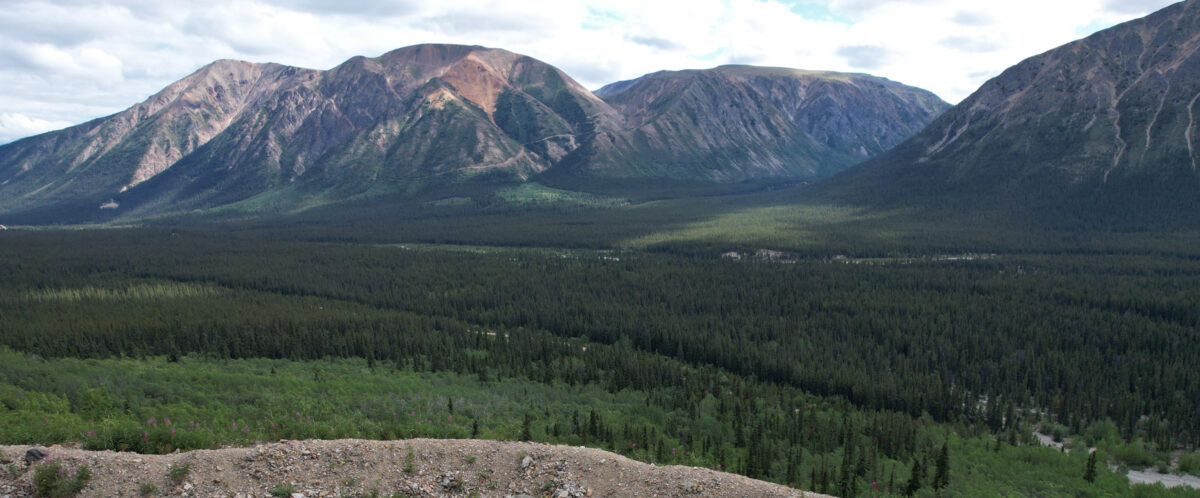
Steller is a single property, but it behaves like a whole mining district, covering roughly 170 square kilometers in the southern Yukon, about 55 kilometers south of Whitehorse and reachable by road the whole way. The property holds the kind of geological variety and diverse metal enrichment you’d normally have to piece together from an entire region.
The current resource comes mostly from Skukum Creek, a structurally controlled gold-silver system that stays open in several directions. Steller also sits in the same Yukon that’s drawn major discoveries like Snowline Gold and the Talamore Metals, a jurisdiction serious money has been pouring into. Up the road sits Mount Skukum, a classic epithermal vein system that fed the historic mine. Further out you find Becker-Cochran with its high-grade antimony, along with silver-rich and gold-rich showings that have barely been touched.
Successful drilling could strengthen the investment case.
Yet, despite the excitement, the stock trades at a fraction of its peers
Blue Jay Gold Corp. came to market priced at a fraction of what comparable Yukon and Canadian gold developers command, despite already owning the grade, the resource and the infrastructure. That valuation gap likely exists solely because the company just went public and most investors have never heard the story.
To see where Blue Jay’s path could lead, take a look at Skeena Resources. Skeena bought the past-producing Eskay Creek mine from Barrick in 2017, started with a high-grade underground resource much like Blue Jay’s Steller Project and grew it into an open-pit reserve near three million ounces.
Of course, there is no guarantee that Blue Jay will become the next Skeena, but Skeena’s path shows how fast a high-grade former producer in a safe jurisdiction can re-rate once the market catches on. In short, Blue Jay’s appeal is easy to understand: an established resource, relatively high grades, existing infrastructure and room for more discoveries.
Gold Weakness is an Opportunity
We also have to consider that gold weakness is an opportunity.
There are substantial reasons to buy and hold gold again – especially after it dipped from about $4,700 to about $4,125 after testing a low of about $3,872.
For one, central banks are still buying, concerns about government debt remain, and changes in interest rates could eventually give gold another lift. In fact, one of gold’s strongest supporters remains a group of buyers with a long investment horizon: central banks.
According to the World Gold Council, central banks purchased an estimated 321.2 metric tonnes of gold during the third quarter of 2026. That exceeded the five-year quarterly average of 227 tonnes and represented a 42% increase from a year earlier. The buying brought purchases for the first nine months of the year to approximately 675 tonnes, up 6% from the same period in 2025. The Council’s latest figures also put second-quarter purchases at 296.3 tonnes, above the earlier estimate of roughly 289 tonnes.
China provides a clear example of that continued appetite. Its central bank increased its gold holdings for the 24th consecutive month in October. Reserves reached 78.3 million ounces, compared with 77.47 million ounces at the end of September. That represents an addition of 830,000 ounces, or approximately 25.8 metric tonnes, during the month.
The Bottom Line: Proven Ounces, Real Infrastructure, and a Discount That May Not Last
There’s substantial for gold, and related stocks like Blue Jay Gold (TSXV: JAY) (OTC: JAYGF).
Remember, not only does the newly issued stock trade at a fraction of what other companies trade for, but it also sits on one of the highest-grade resources in the Yukon, its Steller Project, which has a defined NI 43-101 resource of 400,000 oz Indicated at 9.06 g/t AuEq and 450,000 oz Inferred at 6.45 g/t AuEq.
Grades like this are rare, putting the project among the Yukon’s highest-grade resources. Plus, it already has an established gold-silver resource, infrastructure from past mining operations, and potential for new discoveries.
And it has a significant history of gold production.
In short, if you’ve been looking for a high-grade gold story with real assets behind it, an experienced team in front of it and a price that hasn’t caught up to either, Blue Jay Gold Corp. has earned a serious look.